Hey there! 👋 Let’s face it—keeping up with the latest technology advancements can feel like a full-time job. New tools, smarter systems, and faster machines are popping up left and right, changing how we live, work, and even think. But don’t worry—you don’t need to be a tech guru to understand what’s happening.
Whether you’re an aspiring IT professional or just someone who wants to stay informed, I’ve got you covered with the biggest trends shaping 2025.
1. Artificial Intelligence (AI): More Human Than Ever
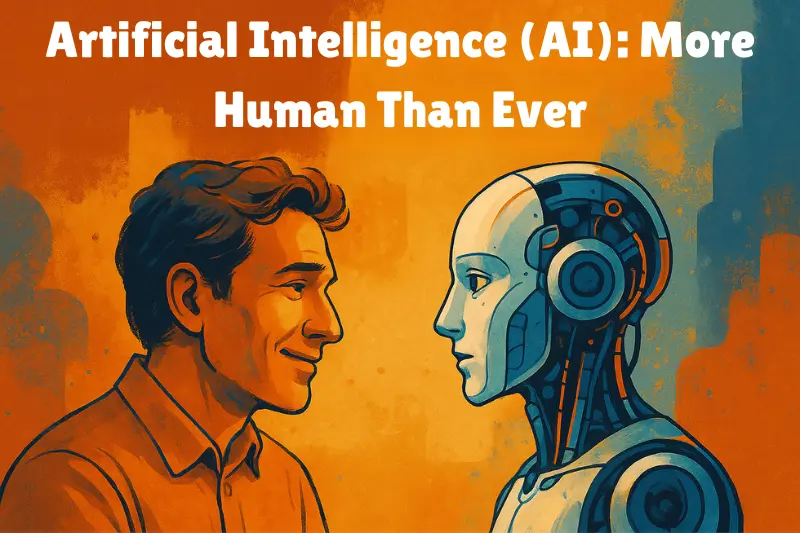
Let’s start with the big one—Artificial Intelligence. AI has moved beyond novelty apps and chatbots. In 2025, it’s more integrated into our lives than ever before.
AI can now:
- Detect diseases like cancer earlier and more accurately than some doctors.
- Write essays, generate art, or compose music.
- Automate complex business operations with little human input.
But here’s the kicker: AI is no longer just supporting human decision-making—it’s replacing some of it entirely. In finance, for example, algorithms are analyzing market behavior and making trades faster than any human ever could. In retail, AI is predicting customer trends and recommending products tailored to your preferences—sometimes even before you know you want them.
Why it matters:
Understanding AI—how it learns, thinks, and evolves—is becoming a core skill in everything from marketing and HR to cybersecurity and software development.
2. Automation: Doing the Repetitive Work for You
While automation has long existed in manufacturing, it’s now sweeping through nearly every industry. In 2025, businesses are embracing Robotic Process Automation (RPA) and intelligent systems to perform tasks that once required humans.
Think:
- Automating invoice processing.
- Onboarding new employees with minimal HR intervention.
- Running entire marketing campaigns with AI-driven tools.
Even tasks that required decision-making, like customer service queries or supply chain management, are being handled with little to no human involvement. This frees people up to focus on creative, strategic, and value-driven work—things machines still can’t replicate (yet).
Why it matters:
If your job involves routine tasks, expect to see automation take over. But if you know how to create, manage, or optimize these automated systems, your value in the job market will skyrocket.
3. Internet of Things (IoT): The World Is Now Connected
The Internet of Things (IoT) is all about connecting everyday objects to the internet so they can communicate with each other and with you. Your smartwatch talks to your phone. Your car talks to your garage door. Your coffee machine knows when you wake up.
By 2025, IoT is deeply embedded in:
- Healthcare: Smart devices monitor heart rates, glucose levels, and more.
- Homes: Lights, TVs, speakers, and even pet feeders are voice-activated and programmable.
- Cities: Smart traffic systems, parking sensors, and waste management solutions are making urban life more efficient.
Why it matters:
IoT generates tons of data. Managing that data securely and efficiently requires skills in cloud computing, cybersecurity, and real-time analytics.
You may also like to read this:
Top 12 Future Technology Trends Shaping The Next Decade
Top 10 Upcoming Tech Innovations You Should Know
Top10 Emerging Technologies 2025 You Should Know About
Best 10 Future Gadgets And Devices For Everyday Use
4. Geotargeting & Hyper-Personalization
Ever notice how you walk by a café, and suddenly your phone shows a discount for it? That’s geotargeting in action, and it’s just the beginning.
Using your location data (along with browsing history and app usage), companies are crafting ultra-personalized experiences. Think:
- Real-time push notifications tailored to your behavior.
- Localized product recommendations.
- Customized content delivery based on your environment.
Why it matters:
This tech is transforming digital marketing and retail. But it also raises questions about privacy, ethics, and consent—creating a growing need for tech-savvy professionals who understand both the technical and legal sides of data use.
5. Robotics: Not Just for Factories Anymore
Remember when robots felt like sci-fi? Not anymore. Robotics is now a real-world, real-time part of industries like:
- Healthcare: Performing surgeries and assisting in patient care.
- Logistics: Managing warehouse inventory, picking and packing orders.
- Agriculture: Monitoring crops, planting seeds, and harvesting produce.
- Customer service: Physical robots helping customers in malls, airports, and restaurants.
Even robots that clean your home, mow your lawn, or patrol office buildings are becoming more common and intelligent.
Why it matters:
Knowing how to operate, program, or troubleshoot these robotic systems opens doors to engineering, AI integration, and systems design careers.
6. Cloud Computing & Edge Technology

Cloud computing isn’t new, but it’s become the foundation of how businesses operate digitally. Now, edge computing is taking it a step further.
Here’s the difference:
- Cloud computing stores data on remote servers.
- Edge computing processes data close to where it’s generated (at the “edge”), like on a smartphone or IoT device.
This reduces latency and increases speed—critical for time-sensitive tasks like self-driving cars or live video analytics.
Why it matters:
Organizations need professionals who can architect cloud and edge systems, manage scalability, and ensure seamless integrations between devices and platforms.
7. Cybersecurity: The Digital Shield We All Need
The more we connect devices and store data online, the more we open ourselves up to threats. In 2025, cybersecurity is no longer just an IT department’s job—it’s everyone’s responsibility.
We’re seeing threats like:
- AI-generated phishing scams that mimic real people’s writing.
- Deepfakes used to manipulate politics, media, and public opinion.
- Ransomware attacks targeting hospitals, schools, and even governments.
Why it matters:
Every tech innovation needs a cybersecurity plan. Ethical hackers, security analysts, and encryption experts are in huge demand. If you enjoy solving puzzles or stopping cyber-crime, this field is for you.
8. Augmented Reality (AR) and Virtual Reality (VR): Bridging Real and Digital Worlds
Once seen as tools only for gaming, AR and VR are now being adopted across industries.
- In Education: Students can take virtual field trips, perform science experiments in 3D, or explore ancient civilizations.
- In Retail: Customers can “try on” clothes, glasses, or even furniture using AR apps before buying.
- In Healthcare: Surgeons use VR to practice procedures or to plan complex surgeries.
- In Real Estate: Virtual home tours give buyers a complete feel of properties without setting foot inside.
As AR and VR devices become more affordable and accessible, businesses are eager to integrate immersive experiences into their operations.
Why it matters:
Designers, developers, UX experts, and digital storytellers who understand these technologies will be highly sought after. The ability to create immersive environments is becoming just as valuable as coding or data analysis.
9. Quantum Computing: Still Early, But Hugely Promising
While traditional computers work using bits (0s and 1s), quantum computers use quantum bits, or qubits, which can be 0 and 1 at the same time. This allows quantum machines to process problems at speeds unimaginable with today’s computers.
In 2025, quantum computing is still in its early days, but it’s already showing promise in:
- Cryptography (cracking or enhancing encryption)
- Complex simulations (like drug discovery or climate modeling)
- Financial modeling and portfolio optimization
Why it matters:
Quantum computing could eventually change how we think about computing entirely. If you’re a student or tech enthusiast, getting familiar with quantum basics now could put you miles ahead when this technology matures.
10. 5G and Beyond: Connectivity at Lightning Speed
We’ve been hearing about 5G for a while now, but its real-world impact is starting to shine in 2025.
Faster speeds, lower latency, and broader bandwidth mean:
- Real-time communication with zero lag (perfect for remote surgeries or autonomous vehicles).
- High-quality, buffer-free streaming and video calls.
- Smoother integration of IoT devices, especially in smart cities.
And already, researchers are laying the groundwork for 6G—promising even faster, smarter, and more adaptive connectivity.
Why it matters:
Telecom specialists, network engineers, and app developers are in high demand as 5G infrastructure continues to roll out. If your tech goals are tied to real-time services or smart environments, connectivity skills will be crucial.
11. Sustainable Tech: Green is the New Smart
With climate change becoming a growing concern, sustainability is now a technological challenge as much as an environmental one. The industry is focusing on green tech solutions like:
- Energy-efficient data centers using AI to minimize energy waste.
- Electric and hydrogen-powered vehicles hitting the roads in record numbers.
- Smart agriculture tools that monitor soil conditions, water levels, and optimize crop yields.
Why it matters:
Tech and sustainability are no longer separate conversations. Whether you’re into hardware design, logistics, or cloud architecture, being able to develop or work with eco-friendly solutions is a major asset.
12. How to Stay Ahead of the Curve
Now that we’ve explored all these exciting latest technology advancements, you might be wondering: How can I keep up and stay competitive? Here are a few practical steps:
🧠 Keep Learning
Take online courses (like those from Coursera, edX, or LinkedIn Learning). Whether it’s Python for AI, cybersecurity basics, or understanding cloud platforms like AWS or Azure, continuous learning is key.
💼 Build Real-World Projects
The best way to learn is by doing. Create a chatbot, automate a task using RPA, or build an AR experience using tools like Unity. Showcasing projects gives you an edge in job interviews and freelance gigs.
🤝 Join Tech Communities
From Reddit and GitHub to local meetups and Discord groups, there’s a global network of people who share your interests. You’ll find support, mentorship, and early insights into what’s trending.
📰 Stay Informed
Read tech blogs, follow influencers on X (formerly Twitter), and subscribe to newsletters like MIT Technology Review, TechCrunch, or Wired. They simplify complex innovations and help you spot patterns.
13. How Technology Is Disrupting Major Industries
It’s not just tech companies that are being transformed—every sector is evolving with the integration of modern technology.
🔬 Healthcare: Smarter, Faster, and More Personalized
Thanks to AI, IoT, and robotics, healthcare is undergoing a digital revolution.
- AI diagnostic tools now detect diseases with greater accuracy than ever.
- Wearable tech like smartwatches can monitor heart rate, oxygen levels, and sleep in real time.
- Telemedicine platforms powered by high-speed 5G and secure video connections are making healthcare accessible across remote areas.
- Surgical robots assist with delicate procedures, reducing recovery time and risk.
Future career opportunities:
Health informatics specialists, bioengineers, medical robotics technicians, AI healthcare data analysts.
📚 Education: Learning Without Boundaries
The pandemic accelerated online learning, but now technology is reinventing education itself.
- Virtual classrooms use VR/AR to take students on immersive learning experiences.
- AI tutors provide customized assistance based on learning style and pace.
- Blockchain certificates are being used to validate qualifications globally.
Future career opportunities:
EdTech developers, instructional designers for immersive learning, educational data analysts.
🏭 Manufacturing: Smarter Supply Chains
From smart factories to 3D printing, Industry 4.0 is reshaping how products are made and delivered.
- IoT sensors help predict maintenance needs and prevent equipment failures.
- Robots and cobots (collaborative robots) work alongside humans in real-time.
- Additive manufacturing (3D printing) reduces waste and increases speed.
Future career opportunities:
Industrial automation engineers, robotics operators, 3D printing specialists, smart logistics managers.
💼 Business and Finance: AI-Driven Decisions
Finance has been quick to adopt technologies like AI, blockchain, and advanced analytics.
- AI trading bots are making split-second investment decisions.
- Blockchain ensures transparency and security in transactions.
- Chatbots and virtual assistants handle customer queries around the clock.
Future career opportunities:
FinTech analysts, blockchain developers, AI risk management consultants, robo-advisor product designers.
14. The Human Side of Tech: Ethics, Privacy, and Responsibility
As technology advances, so does its power to influence our lives in both good and dangerous ways. This is why ethical tech development is now a priority.
- AI bias: Algorithms must be trained on diverse data to avoid discrimination.
- Data privacy: With so much data being collected, users must have control over what is shared.
- Job displacement: While automation creates new roles, it also eliminates traditional ones. Reskilling and upskilling are critical.
Why it matters:
Tech isn’t just about building things—it’s about building responsibly. Professionals who understand both the technical and ethical implications of innovation will be the leaders of tomorrow.
15. How to Future-Proof Your Career
Whether you’re a student, a mid-career professional, or a curious explorer, here are some actionable tips to stay relevant and thrive in this evolving landscape:
Focus on Transferable Tech Skills
- Programming (Python, JavaScript, SQL)
- Data analysis (Excel, Tableau, Power BI)
- Cloud platforms (AWS, Google Cloud, Azure)
- Cybersecurity basics
Pick a Niche That Excites You
Don’t try to master everything. Choose a niche:
- AI & machine learning
- UX/UI design
- Blockchain
- Smart manufacturing
- AR/VR design
Then go deep. Build a portfolio. Contribute to open-source projects. Intern. Freelance. Share your journey.
Certifications that Give You an Edge
- Google IT Support Professional Certificate
- AWS Certified Cloud Practitioner
- Microsoft Azure Fundamentals
- CompTIA Security+
- Certified Ethical Hacker (CEH)
- IBM Data Science Certificate
Network & Collaborate
- Join local and online tech communities.
- Attend hackathons, webinars, and tech expos.
- Follow industry leaders on LinkedIn and X (Twitter).
- Ask questions, contribute ideas, and seek mentorship.
Stay Curious, Stay Updated
Bookmark resources like:
- TechCrunch
- Wired
- MIT Technology Review
- Ars Technica
Even 10 minutes a day can keep you ahead of most people.
Conclusion
The latest technology advancements in 2025 are reshaping our world in powerful ways—from AI and automation streamlining industries, to IoT and robotics enhancing daily life, to sustainable and ethical innovations tackling global challenges. These changes aren’t just for big tech companies—they’re impacting education, healthcare, finance, manufacturing, and more.
To stay relevant, it’s not about mastering every trend—it’s about being adaptable, continuously learning, and aligning your interests with where tech is headed. Whether you’re just starting out, switching careers, or looking to grow in your field, focusing on in-demand skills, joining tech communities, and staying informed will put you ahead of the curve.
The future belongs to those who embrace it with open eyes and an eager mind. So explore boldly, build confidently, and remember: you don’t just have to keep up with technology—you can help lead it. 🚀
FAQs
Q1: What are the most important technology advancements in 2025?
A: Key advancements include artificial intelligence (AI), automation, Internet of Things (IoT), robotics, augmented and virtual reality (AR/VR), edge computing, 5G connectivity, quantum computing, and sustainable tech solutions.
Q2: How is AI changing the way we work?
A: AI is automating repetitive tasks, analyzing large data sets, making real-time decisions, and even generating content. It’s being used in everything from healthcare and finance to customer service and marketing, making processes faster and more efficient.
Q3: What is the difference between cloud computing and edge computing?
A: Cloud computing processes data on remote servers, while edge computing processes data closer to where it’s generated (e.g., on IoT devices). Edge computing offers faster response times and is ideal for time-sensitive tasks like self-driving cars.
Q4: Is automation replacing human jobs?
A: Automation is replacing some repetitive and manual jobs, but it’s also creating new roles in tech development, system management, and strategic oversight. The key is to reskill and adapt to the changing landscape.
Q5: What industries are most affected by new technologies?
A: All industries are being impacted, but the most rapid changes are happening in healthcare, education, manufacturing, finance, logistics, and retail—especially in how services are delivered and optimized.