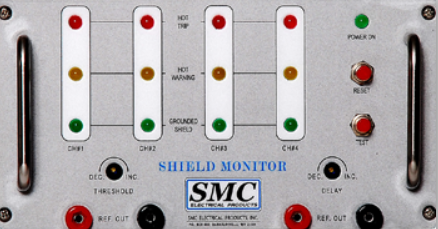

A shielded DC feeder cable has more than one insulation boundary to monitor. The cable’s shield separates the main conductor from the surrounding structure, and a problem at either boundary can produce a different warning condition. Swartz Engineering’s CSM Shield Monitor is designed to monitor those conditions on shielded DC feeder cables.
The monitor can watch up to four feeder cable channels. Its published product information describes two fault types: a “hot” shield and a grounded shield. Understanding the distinction helps explain what the device is checking and how its indicators communicate a condition to operators.
What a hot shield indicates
A hot shield occurs when the shield’s potential, measured against the negative rail, rises beyond a preset margin. The product page describes this as an indication of insulation breakdown between the cable’s main conductor and its shield.
The CSM uses staged indications for this condition. As the reading approaches the predetermined limit, a yellow LED and an annunciation output provide a warning. At the set limit, a red LED and trip output indicate that the threshold has been reached. The hot shield trip remains latched until reset, according to the product description.
Those stages give operators distinct signals to interpret: a warning as the reading nears its configured limit, followed by a trip indication when that limit is reached. The exact threshold is part of the system’s setup and should be determined for the application by qualified personnel.
How a grounded shield differs
A grounded shield points to a different insulation boundary: the one between the cable shield and structure ground. The CSM product page says this condition activates a green front-panel LED and an annunciation output. Unlike the hot trip, the annunciation contact and lights are not latched; they can turn off when the condition no longer warrants them.
Keeping these conditions distinct matters when interpreting an alert. A hot shield relates to insulation between the main conductor and the shield. A grounded shield relates to insulation between the shield and structure ground. The monitor’s separate indications help identify which relationship triggered a signal.
A monitoring approach for DC feeders
The CSM Shield Monitor provides continuous shield monitoring and has four channels for feeder cables. Its listed features include panel mounting, front-panel diagnostic indicators, a reset, and an adjustable sensitivity delay. Product versions also have different threshold and output arrangements, so the model and configuration should be matched to the project requirements using the current product documentation.
For rail, industrial, or other DC distribution settings, cable monitoring is one part of the broader electrical protection plan. The monitor does not replace proper cable selection, installation, grounding, or system coordination. It gives operators a defined way to observe shield conditions and receive signals when configured limits are approached or reached.
Swartz Engineering’s CSM Shield Monitor is described on the company’s product page, which includes its operating details and a downloadable datasheet. Reviewing that documentation with the project’s electrical team can help clarify channel needs, thresholds, outputs, and reset behavior before specifying the monitor.