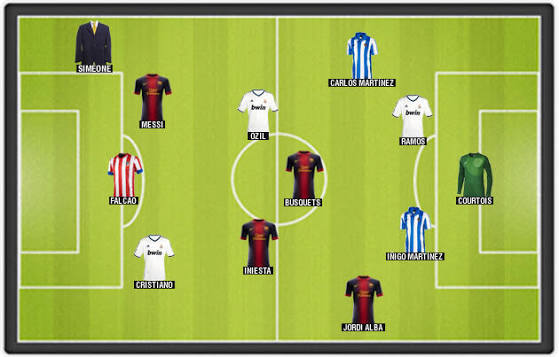

Building a 3–5 leg accumulator only becomes rational when each leg is chosen through a filter that respects how that league season actually behaved, not through a rush to fill slots. In La Liga 2012/13, 1,091 goals at 2.87 per match, Barcelona’s 100-point campaign, and a clear gap between the top three and the rest created a structured environment where some fixtures were naturally more reliable than others for stepping into multi-leg bets. Using that structure as your starting point lets you design accas that lean on predictable patterns instead of emotional picks.wikipedia+2
Why a 3–5 Leg Acca Needs a Different Logic from Singles
Accumulators multiply risk with each additional leg, so errors in match selection grow non-linearly as you move from one game to five. In a season like La Liga 2012/13, where Barcelona were overwhelmingly strong but the middle and lower tiers were more volatile, this compounding effect made it especially important to distinguish “anchor legs” from high-variance angles. Singles can tolerate occasional speculative positions; accas cannot, because one misread in a chaotic fixture cancels the value of several solid calls.sbnation+2
The league’s structure also means that not all edges translate equally into multi-leg formats. A slight value edge on a mid-table coin-flip might be acceptable as a standalone bet, but when chained with four other outcomes, its inherent uncertainty becomes a major threat to the ticket. By contrast, strong home favourites in 2012/13, especially from the top three, often delivered results aligned with their underlying strength, making them more suitable as acca anchors than as solo “big score” attempts. The cause–effect relationship is straightforward: the more legs you add, the more you should demand clear structural superiority, not just marginal price discrepancies.tntsports+2
Understanding the 2012/13 Landscape as an Acca Filter
To use 2012/13 as a template, you first need to see how that season’s hierarchy shaped outcomes. Barcelona reached 100 points with 115 goals scored and only 40 conceded, while Real Madrid and Atlético Madrid formed a strong second tier and then a gap opened to the rest of the league. At the opposite end, Deportivo La Coruña, Mallorca, and Real Zaragoza were relegated after conceding large numbers of goals and failing to convert enough performances into points. This top-heavy structure meant that matches involving elite vs clearly weaker sides were usually defined more by structural quality gaps than by short-term form.thesefootballtimes+3
League-wide, La Liga has also been known for a strong home advantage, with studies highlighting high home win percentages compared to some other European competitions. In 2012/13, that bias combined with the presence of dominant home teams to create recurring situations where backing a strong host against a fragile visitor had a relatively stable probability profile. For accumulators, that context implies that you should systematically prefer legs built around home superiority and clear goal-difference gaps, reducing reliance on finely balanced mid-table clashes.dailysportpick+1
Core Selection Logic: From Full Round to 3–5 Candidates
When you approach a typical La Liga 2012/13 matchday with an acca in mind, the key is to move from a wide list of fixtures to a small pool of high-quality candidates through simple but rigorous filters. Start by marking home matches involving the top three against opponents in the lower half of the table, since those pairings amplified the existing gap in quality and benefited from home bias. Then add hosts from the upper mid-table with positive goal differences facing relegation-threatened teams that conceded many goals, as those fixtures often combined superior structure with opponent fragility.wikipedia+3
After that initial sift, you can discard matches where both sides sit close together in points and goal difference, as these are inherently more uncertain and therefore less suited to multi-leg bets. What remains is a shortlist of games where hierarchy, venue, and defensive records align in favour of one side or a narrow range of outcomes. By building your 3–5 leg acca only from this reduced set, you ensure that each leg is supported by season-level structure rather than just hunches about form.
Comparing Match Types for Acca Suitability
To see how this plays out in practice, it helps to contrast the main match types in 2012/13:
| Match Type | Structural Clarity | Typical Use in Acca |
| Top 3 home vs bottom-half team | High | Anchor leg (1X or -handicap) wikipedia+1 |
| Top 3 away vs mid-table team | Medium | Selective, often reduced stakes wikipedia+1 |
| Upper mid-table home vs relegation zone | Medium–High | Support leg with careful pricing sbnation+1 |
| Mid-table vs mid-table | Low | Usually excluded |
| Relegation six-pointers | Very Low | Avoid as acca legs |
This comparison highlights that not all “interesting” games are good accumulator material. Top-3 home fixtures and structurally strong hosts facing fragile visitors gave you clearer, data-backed expectations in 2012/13, while mid-table battles and relegation duels left too much room for emotional swings and randomness. Aligning your 3–5 leg selections with the top rows of the table increases the probability that your acca is built on predictable patterns rather than on the matches most likely to produce surprises.sbnation+3
Mechanisms: How League Structure Translates Into Multi-Leg Probability
The mechanism that makes 2012/13’s hierarchy useful for accas is the concentration of quality and consistency at the top. Barcelona’s and the other top sides’ large positive goal differences stem from sustained superiority in chance creation and defensive control, not just isolated bursts. When these teams played at home, the combination of tactical dominance, crowd support, and opponent caution regularly produced outcomes in line with their role as strong favourites. For an acca, that recurrent pattern is more valuable than wild variance.espn+2
Meanwhile, relegation candidates with very negative goal differences and high goals conceded totals were structurally prone to collapses, especially away from home. This means that taking them to “do something” in an accumulator—avoid defeat, keep it close, or win outright—exposed you to the risk that their chronic weaknesses would reappear at the worst possible time. Recognizing that league structure produces asymmetries in reliability is key: strong teams can fail, but their distribution of outcomes is tighter and more favourable; weak teams may offer the occasional upset, but their downside tail is far larger, which is dangerous when one failure voids your entire ticket.tntsports+2
Integrating Odds and UFABET into the Shortlisting Process
No selection logic is complete without considering how prices translate probabilities into risk–reward. After you have a shortlist of structurally strong matches, the next step is to compare the implied probabilities from the odds with your expectations. If a top-three home side is priced in a way that already assumes near-certainty, its value as an acca leg depends less on price edge and more on risk reduction; you might still include it as a stabiliser, but you should not treat it as a hidden gem. Conversely, if an upper mid-table host with positive goal difference faces a clearly fragile visitor and the odds undervalue that structural advantage, that fixture becomes a prime candidate for a core leg.
In practice, different operators may shade lines differently based on public interest and perception. When integrating this with your workflow, you might, for example, use an external sports betting service like ufabet auto as a reference point after forming your own shortlist and estimated probabilities. Under conditions where you notice that its odds on structurally strong hosts remain slightly more generous than elsewhere, that discrepancy can guide which legs make it into your final 3–5 game acca and which are better left for singles. The cause–effect relationship is simple: structure identifies potential legs; pricing from multiple sources determines which of those legs actually offer acceptable risk–reward inside a combined bet.
Using a Stepwise Sequence to Build Each Ticket
Turning theory into a repeatable workflow requires a clear, stepwise sequence that you can apply to every La Liga round, whether you are using 2012/13 as a historical guide or working with current seasons. The sequence below illustrates how you might systematically move from the full fixture list to a curated acca:
- Map the round
Scan all fixtures and mark home teams from the top three and upper mid-table based on table position and goal difference.wikipedia+1 - Eliminate high-chaos matches
Cross out mid-table vs mid-table games and relegation six-pointers where emotional stakes and narrow margins increase volatility.thesefootballtimes+1 - Check structural mismatches
Among remaining fixtures, identify hosts with strong positive goal differences facing opponents with big negative differentials or high goals conceded totals.sbnation+1 - Compare implied probabilities
Look at posted odds and derive implied chances, comparing them with your structural expectations to see where lines are conservative or aggressive.soccerstats+1 - Select 3–5 legs
From the remaining high-confidence matches, choose 3–5 legs that complement each other without overloading on a single type of high-risk narrative, such as multiple big handicaps.
This sequence deliberately filters for structure first and price second, rather than chasing the most tempting odds. The interpretation is that every leg in your accumulator should be able to justify itself in the language of league hierarchy and statistical profile before you ever discuss decimal numbers, making the final ticket an expression of your model rather than a product of the coupon layout.
When a 3–5 Leg Strategy Still Breaks Down
Even with a robust structure-based method, multi-leg tickets can fail for reasons intrinsic to football’s randomness. Red cards, penalties, early injuries, and freak goals can derail matches that otherwise followed your script, and accumulators magnify the cost of each of these shocks. In 2012/13, underdogs occasionally produced heavy upsets and top sides dropped points in spots where they seemed overwhelmingly favoured, reminding you that no amount of structural logic can guarantee a perfect weekend.playupsports.wordpress+1
There is also the problem of overconfidence in historical patterns. What held in 2012/13—a huge gap between Barcelona and the rest, specific relegation teams, and particular tactical profiles—cannot be applied blindly to other seasons or leagues. The risk is that you learn the shape of that year but fail to update when competitive balance shifts, leading you to overrate current elites or underrate improved strugglers. The antidote is to keep the framework but refresh the inputs: use league hierarchy, home advantage, and goal difference every year, but repopulate those categories with current teams rather than sticking to old names.espn+2
How casino online Environments Distort Acca Construction
The environment you use to place bets has a tangible effect on how you build your accumulators. When most access to La Liga markets is through a casino online website, the interface often foregrounds pre-built combos, boosted odds, and “popular bets,” which are designed for entertainment and engagement rather than for long-term edge. These features usually encourage more legs, riskier markets, and inclusion of big-name fixtures regardless of structural suitability, subtly pushing you away from the careful 3–5 leg selection that your 2012/13-based logic would recommend.
The cause–effect chain here is important: when product design rewards variety and spectacle, bettors are tempted to break their own filters by adding “just one more” game or by including an unvetted high-profile match to make the ticket feel more exciting. The impact is that small structural advantages from your main legs get diluted by one or two undisciplined additions. Recognizing this distortion ahead of time allows you to commit to a pre-built list of acceptable fixtures and a maximum number of legs before opening the interface, preserving the link between your analysis and the actual bet that goes through the cashier.
Summary
Selecting 3–5 La Liga matches for an accumulator with a higher chance of success is about aligning your ticket with the real structure of the league rather than with the most attractive prices or televised games. The 2012/13 season, with its 2.87 goals per match, Barcelona’s 100-point dominance, a clear top-three tier, and fragile relegation candidates, provides a concrete example of how league hierarchy, home advantage, and goal differences create matches that are far more suitable as acca legs than others. By building from this structure through a stepwise filter and then checking odds across outlets, you can consistently find legs that reflect stable patterns rather than one-off narratives.