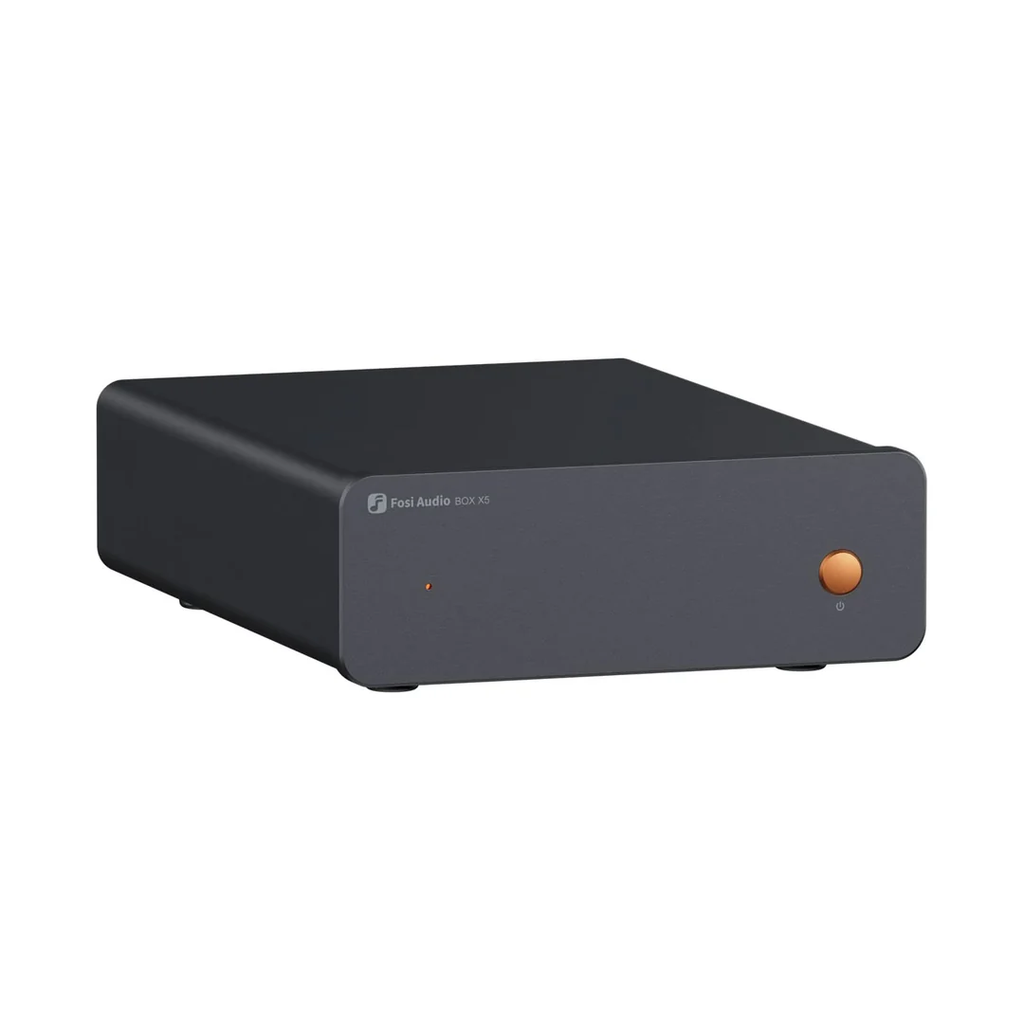
Desk space is limited, and cables multiply faster than we expect. That is why combined units are popular. A headphone amplifier and preamplifier in one case can drive headphones directly and also send a signal to a power amplifier or active speakers. This article explains how such combination units work, what to check and how they relate to separate preamplifiers, with reference to the models on the Fosi Audio audio preamplifiers collection page.
Two roles in one device
A headphone amplifier strengthens a signal so that headphones receive enough power. A preamplifier prepares a signal and controls volume for a power amplifier. A combined unit contains both functions. You connect your source, and you can listen through headphones, send the signal on to speakers, or sometimes both.
For a person who works at a desk and also has a speaker system, this saves space and money. It also keeps the volume control in one place.
What the page lists
Among the eleven products on the collection page, a few are described by their names as combined units. The SK01 is called a Headphone Amplifier Preamp. The GR40 is a Tube DAC Headphone Amp Preamp, which means it also contains a DAC. The GR70 is a Tube Headphone Amp and appears in the same collection.
The page lists names, prices and ratings but no specifications for these products. It does not tell you the number of inputs, the output power, or whether the headphone output and the preamplifier output can be used together. Before buying, check the product page of the model you want.
What a built in DAC adds
The GR40 includes a DAC, according to its name. A DAC converts digital signals from a computer, phone or similar device into analog signals. With one built in, you can connect a computer by USB or another digital input and avoid the need for a separate converter. This reduces cables and gives you a single point of control.
If you already own a DAC you like, you may prefer a unit without one, so that you do not pay for a feature you will not use.
Questions to ask
How will the outputs behave? Some combined units mute the preamplifier output when headphones are plugged in. Others keep both active. Neither is wrong, but you should know which you have. If you use headphones late at night and speakers during the day, automatic muting may be convenient. If you want both at once, check that this is possible.
Is the volume control shared? In many units a single knob controls both headphones and the preamplifier output. That means the level that suits your headphones may be too loud or too quiet for your speakers. Some designs offer separate controls or a gain switch, which makes life easier.
What inputs are available? Check for the connections you need, such as RCA, USB or optical. A combined unit with too few inputs may force you to swap cables.
What headphone outputs are provided? Look at the plug sizes, such as 3.5 mm or 6.35 mm. Some units offer more than one. Check that your headphones can be connected without adapters, or buy a good quality adapter if needed.
Power for demanding headphones
Headphone amplifiers differ greatly in output power. If your headphones have a high impedance, you need an amplifier that can drive them properly. The page does not give power figures for these models, so check specifications and compare them with your headphones’ requirements.
Tube based combos
The GR40 and GR70 are tube products by name. Tube units need a warm up period, give off heat and need tubes replaced eventually. They require ventilation and careful handling. If these points do not trouble you, a tube combo is a fine choice. If you want a maintenance free option, a solid state unit may suit you better.
Using one as a preamplifier
To use a combined unit as a preamplifier, connect its outputs to your power amplifier with suitable cables, and connect the power amplifier to your speakers. Switch on the combined unit first and the power amplifier last. Keep the volume low when you begin.
If the unit has both fixed and variable outputs, use the variable one so that its volume control affects the speakers. If you accidentally use the fixed output, the volume knob will not change the loudness of your speakers.
Advantages and limits
The advantages are clear. You save space, cables and often money. You also gain flexibility, because one unit covers both headphone and speaker use.
The limits are that you cannot upgrade one function without replacing the other, and that compromises in design can mean neither function is as strong as in a dedicated unit. For most home and office uses, this is a fair trade.
Summary
A headphone amplifier preamp combination is a sensible option for desk based setups that use both headphones and speakers. The collection page lists several candidates, though it gives few specifications. Read the individual pages, check the behavior of the outputs, confirm the inputs you need and make sure the power suits your headphones. A thoughtful choice will give you a tidy and flexible system.